Evergon Labs
The MVP of a tokenization platform, built for two kinds of customers.
- Role
- Tech lead, via ILIOS Studio
- Period
- 2024 · 6 months
- Sector
- Tokenization infrastructure, Web3
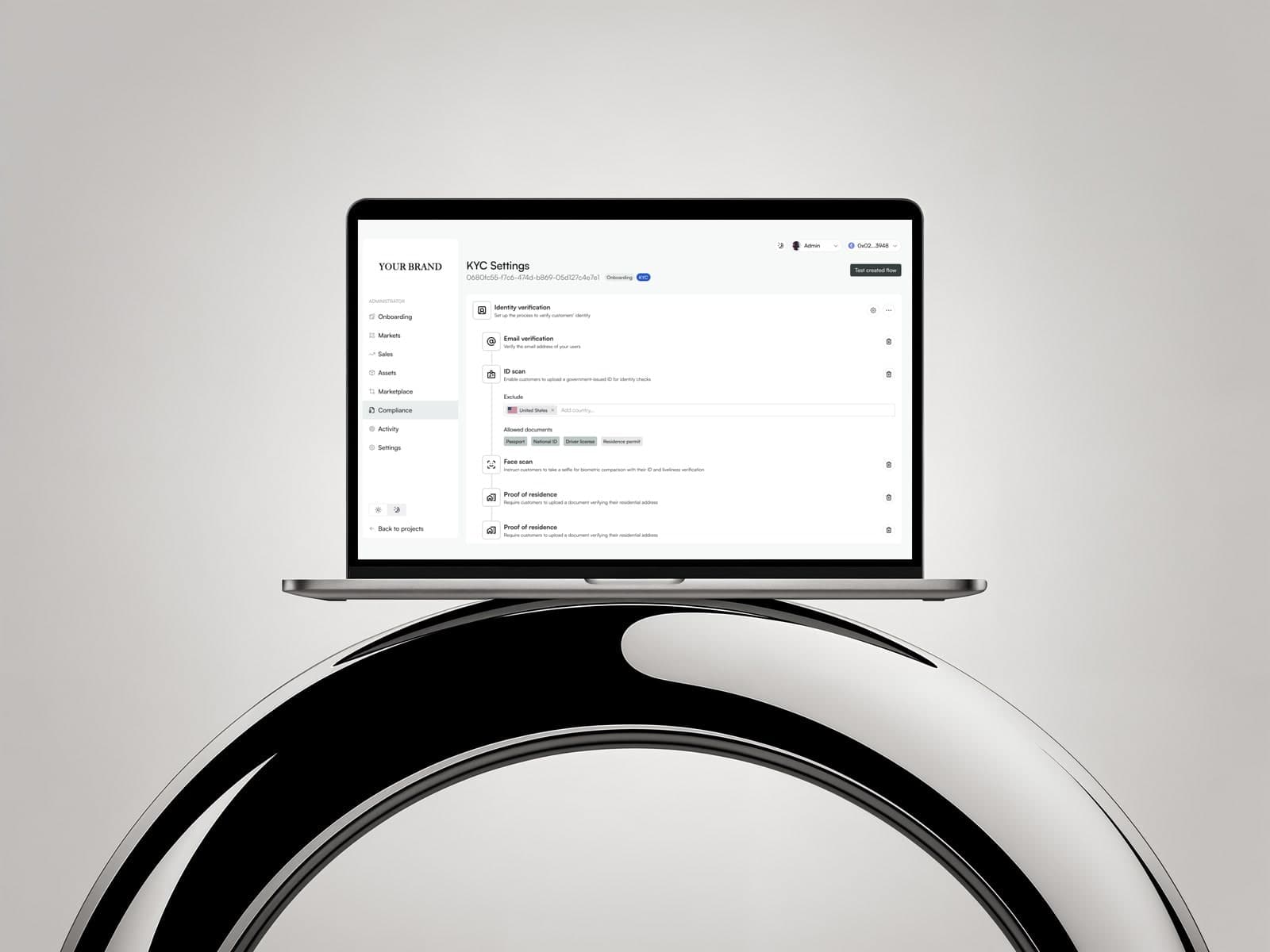
- 01MVP in 4 monthsFour building blocks, from existing protocols to a working product
- 02Demoed at Plug and PlayThe reception at the Summer Summit validated building the full product
- 03Handed over in 2 monthsThe team ran the codebase on its own once I left
Evergon Labs builds infrastructure to tokenize real-world assets in compliance with regulation.
When I joined, the company had its own protocols and part of an API that talked to them. There was no product on top yet.
I joined as tech lead through my studio, to build the MVP with a team of four developers. I designed the architecture of everything above the protocols, and wrote the foundations of most of it.
One API, two ways in: an SDK for customers with developers, and a white-label app for customers without.
- Team
- 5 — me on architecture and foundations, 3 developers on the API and protocol layer, 1 on the white-label app
- Stack
- TypeScript · NestJS · Next.js
- Architecture
- Hexagonal · dependency injection
Three problems to solve before the platform could be shown to customers.
- Problem 01
The two kinds of customers needed opposite things: a finished product for one, building blocks for the other.
SolutionA frontend SDK for teams with developers, and a white-label app built on that same SDK for teams without.
- Problem 02
Each customer using the white-label app needed it in their own brand.
SolutionA design system themed through tokens, so a new brand is a new set of values rather than new components.
- Problem 03
The MVP depended on things that were going to change: Web3 providers, wallet tooling, and an API that was still being written.
SolutionA hexagonal architecture. Product code depends on contracts, and each dependency is an implementation behind one of them.
How we built it, step by step.
One API, two ways in
The protocols and the API were the common base. On top of them, the product had to offer two entry points: an SDK for customers who would build their own interface, and a ready-made app for those who would not.
I split the work into four building blocks: the API, the SDK, the design system and the white-label app.
MVP in 4 months.
Starting from the protocols and part of an API, the team shipped the SDK, the design system and the white-label app, with frontend and backend built in parallel.
Demoed at Plug and Play.
The MVP was shown at the Summer Summit in June 2024, and the reception validated building the full product.
Handed over in 2 months.
The lead passed to a developer from the original team, with documentation covering the architecture and every technical choice.
Still live in 2026.
Evergon is in production and still offers both entry points from the MVP: a white-label marketplace and developer tools.
Next case study
Pitchy — 2021A two-way text to speech editor for video voice-overs.